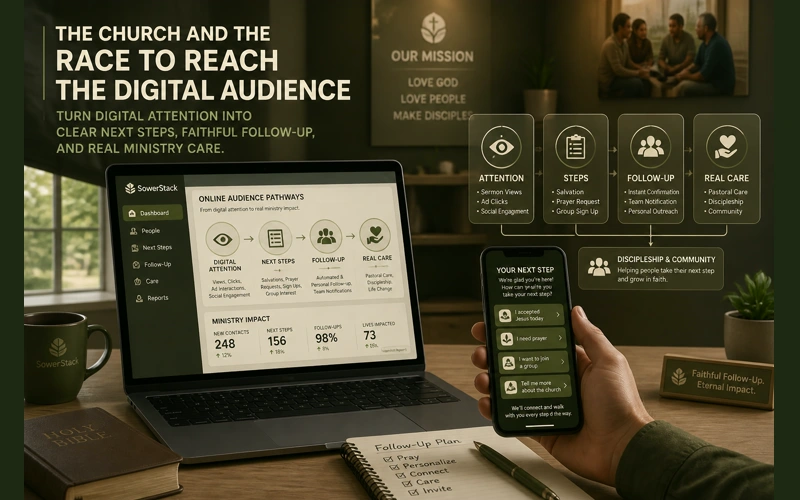
A pastor can preach to a full room on Sunday and still have a quiet line of people listening before they ever arrive. They are not standing in the lobby. They are not filling out a connect card. They are watching a sermon clip at lunch, reading the church website after the kids are asleep, checking service times from a parking lot, or sending a message they hope someone will answer.
That digital attention is easy to miss because it does not always feel like ministry yet. It may appear as a website visit, a livestream comment, a form submission, or a half-finished search for service times. Behind those signals are people. Some are new to faith. Some are returning after years away. Some are carrying grief, questions, guilt, or curiosity they are not ready to say out loud.
The race to reach the digital audience is not a race for visibility alone. It is a race to notice people early enough to serve them well. Your church does not need to become loud online to be faithful online. You need a clear path from attention to care.
The digital audience is already in the room before the service
Turn digital attention into a next step
People often decide whether a church feels approachable before they speak with anyone from the church. They look for signs of life, clarity, safety, and next steps. They want to know what happens on Sunday, what you believe, whether their children will be cared for, and whether someone like them could walk in without feeling lost.
This does not make digital ministry less spiritual. It simply means that the first contact often happens in a place where your church cannot see the person yet. A website visit may be the first time someone allows themselves to consider coming back to church. A livestream may be the first sermon they have heard in years. A social post may be the first invitation they have noticed since moving to town.
You do not have to treat every online interaction as a dramatic moment. Most are quiet. Most are incomplete. Yet many real ministry stories begin quietly. A person pays attention before taking a step. That step may lead to a conversation, and that conversation may become the first moment they are truly known.
That sequence matters because it changes the way you think about digital communication. The question is not only, “How many people saw this?” A better question is, “If someone is paying attention, can they find a faithful next step?”
Visibility is not the same thing as evangelism
Visibility helps people find you, but evangelism requires more than being found. Faithful witness includes clarity, invitation, response, and follow-through. If someone sees your church online but cannot understand what to do next, visibility has done only part of the work.
Many churches inherited a communications model built around announcements. The church had events, so the church told people about events. The church had service times, so the church posted service times. The church had a sermon, so the church uploaded the sermon. None of that is wrong. Announcements help people participate in the life of the church.
Evangelism asks a different set of questions. What would a spiritually curious person need to know? What would make a nervous visitor feel prepared? What question might someone be afraid to ask? What response should happen when someone reaches out? Those questions move communication from information toward care.
A church can post often and still leave people uncertain. A church can post less often and serve people well if each piece of communication points toward a real next step. The difference is not volume. The difference is whether the digital path has been built with people in mind.
A simple path from attention to care
Someone watches, reads, searches, or visits online.
They find one clear action that fits their moment.
A person or system notices and follows through.
The interaction becomes prayer, conversation, or community.
Your website should answer ministry questions, not only logistical ones
A church website serves as a first conversation for many people. It should answer the practical questions clearly, but it should also reduce the emotional friction of taking a first step. A visitor is not only asking what time service starts. They are asking whether they will know where to go, whether their children will be safe, whether they will be singled out, and whether the church seems ready to receive them.
That does not require a complex site. It requires careful thinking. A simple page that explains what to expect can serve a visitor better than a polished page that assumes the person already knows church culture. Clear parking information, a plain description of the service, a children’s ministry note, a contact option, and a simple invitation can remove many small barriers.
Your website should also make response easy. If someone wants prayer, they should not have to hunt for a buried email address. If someone wants to visit, the path should be obvious. If someone wants to learn about faith, the page should point them toward a human conversation or a resource that fits the question.
Church websites often become storage rooms for ministry information. They hold everything, but they do not guide anyone. A better website acts more like a host. It notices what a new person might need and gently shows them where to go next.
Social media should lead somewhere human
Social media can introduce people to the tone, teaching, and life of your church. It can remind someone that your church exists. It can carry a sermon idea into the week. It can help a person feel a little less unfamiliar before they visit.
The difficulty is that social media rewards activity more than care. It is easy to measure likes, comments, and views, then mistake those numbers for ministry fruit. Those numbers may show attention, but attention still needs direction. If every post stands alone, the person who responds may not know what to do after they respond.
A better approach is to connect social content to a ministry pathway. A sermon clip can point to the full message or a prayer request form. A baptism photo can point to a conversation about faith. A community event post can make visiting feel less intimidating. A pastoral reflection can invite people to send a question or request prayer.
This does not mean every post needs a formal call to action. That would become exhausting for you and for the reader. It means your church should know where meaningful responses belong. When someone comments with a real need, sends a message, or clicks through to your site, the next step should not depend on someone remembering to check three different inboxes.
Livestream viewers need a pathway, not just a broadcast
Livestream ministry often begins as a way to serve people who cannot attend in person. That is a good reason. It can serve shut-ins, traveling members, families dealing with illness, and people in fragile seasons who need connection to the preached Word and the gathered church. Over time, the livestream also becomes a first-contact space for people who are deciding whether to visit.
A livestream without a pathway leaves viewers anonymous by default. Some people will stay anonymous for good reasons. They may need time. They may be healing. They may be unsure whether church is safe for them. Privacy should be respected.
Respecting privacy is different from offering no next step. A viewer should be able to request prayer, ask a question, plan a visit, or receive a simple follow-up without feeling pressured. The church can make that invitation clear and gentle: if you are watching and would like someone to pray with you, here is the place to reach out.
The same principle applies to sermon archives. A message may continue serving people months after it was preached. If a person hears a sermon that stirs conviction, grief, hope, or curiosity, can they find a way to talk with someone? That is where digital tools become servants of pastoral care.
Follow-up is where digital attention becomes ministry
Follow-up is not administrative cleanup after the real ministry happens. Follow-up is often the first visible sign that the church sees the person. When someone fills out a form, sends a message, asks for prayer, or says they plan to visit, the next response teaches them something about the church’s care.
The response does not need to be elaborate. A timely, personal note often means more than a polished sequence. The goal is not to impress people with efficiency. The goal is to help them know that their step was noticed and that someone is willing to walk with them.
Simple systems protect that care. A shared inbox, a form notification, a weekly review rhythm, or a basic contact record can keep people from being forgotten when Sunday becomes busy. This matters especially for churches with limited margin. The more responsibility one pastor or a few volunteers carry, the more useful a clear system becomes.
A good follow-up system answers practical questions without making ministry feel mechanical. Who saw the request? Who should respond? What was said? What needs to happen next? When should we check again? These are not corporate questions. They are pastoral questions with operational handles.
Small churches have a real advantage online
A smaller church may not have many resources, but it often has a relational advantage. People can be known. Responses can be personal. A visitor can meet the pastor without navigating layers of process. A prayer request can reach someone who will actually pray.
That advantage should shape your digital strategy. You do not need to imitate churches with far more people, equipment, and weekly output. You need a digital path that matches your actual capacity and expresses your actual care. If one person can faithfully respond to new inquiries each week, build around that. If your church can maintain one strong visitor page and one consistent follow-up rhythm, start there.
Resourcefulness is not a lesser ministry posture. It can produce better decisions because it forces clarity. When you cannot do everything, you have to decide what matters most. In digital evangelism, what matters most is not producing endless content. What matters most is helping real people take faithful next steps.
This is why a small church can be effective online without becoming consumed by online activity. A clear invitation, a helpful website, a simple form, and a real response can serve people better than a crowded digital presence with no follow-through.
Build one pathway before adding more tools
A sustainable digital ministry system usually begins with one clear pathway. Choose one kind of person you want to serve better, then make the path plain. It might be a first-time visitor, a livestream viewer, a prayer requester, a parent looking for children’s ministry information, or someone exploring faith.
Once you choose the pathway, write down what should happen from first attention to personal care. Where do they begin? What question are they asking? What page, form, email, or conversation should help them? Who receives the response? When does follow-up happen? How will you know whether it happened?
That exercise often reveals gaps without condemning what you already have. Maybe the website has useful information, but the response form is hard to find. Maybe people send messages through social media, but no one has a weekly rhythm for checking them. Maybe the livestream has viewers, but the invitation to request prayer is never mentioned. These are not failures. They are opportunities to make the pathway clearer.
After one pathway works, build another. This pace protects your church from tool fatigue. It also keeps your digital work connected to ministry instead of becoming a separate project that demands attention without serving people.
Digital tools should protect pastoral attention
Pastoral attention is one of the most limited resources in ministry. You cannot remember every message, every new face, every prayer request, and every next step by memory alone. Trying to do so eventually creates strain, and strain makes important things easier to miss.
Tools can help when they carry the remembering. A form can collect the right information. A notification can alert the right person. A contact record can preserve the history of a conversation. A reminder can prompt follow-up after a visit. A simple dashboard can show which requests are still open.
None of those tools replace prayer, discernment, hospitality, or conversation. They support those responsibilities by reducing the chance that a person disappears into the cracks between Sunday and Monday. The tool does not make ministry faithful. The tool makes faithful ministry easier to sustain.
This is the right test for every digital tool: does it help you serve people with more clarity and follow-through? If it does, it may be worth adopting. If it only adds another place to check and another task to maintain, it may not fit this season.
A practical audit you can do this week
A useful audit begins with one ordinary scenario. Pretend you are new to your church and uncertain about visiting. Search for the church the way a visitor would search. Visit the website from a phone. Look for service times, children’s information, beliefs, parking, contact options, and what to expect. Notice where the path feels clear and where it asks the visitor to guess.
Then test one response pathway. Submit the contact form or ask a trusted person to do it. Send a message through the public social account. Request prayer through the website if that option exists. Track what happens next. How quickly is the response noticed? Who receives it? Is the tone warm and clear? Does the person know what to do after the first reply?
Finally, review one week of digital attention. Look for the people behind every inquiry, message, comment, registration, and prayer request. You are not looking for impressive numbers. You are looking for people who raised their hands in some small way. Did each one receive care?
This kind of audit is simple, but it is revealing. It shows whether your digital presence is only communicating information or whether it is helping people move toward connection.
The faithful race is measured by care
The church does not win the digital audience by becoming louder than every other voice. The church serves the digital audience by being clear, present, and faithful when people show signs of spiritual interest. That work may begin with a search result or a sermon clip, but it should not end there.
People are already forming impressions before they visit. They are already listening from the edge. They are already deciding whether to take a step. Your church can meet them with a pathway that respects their pace and invites them toward real community.
We help churches think through these pathways because digital tools matter most when they serve human care. The goal is not more activity for its own sake. The goal is attention stewarded faithfully, questions answered clearly, and people noticed before they disappear.
The race worth running is not the race to look impressive online. It is the race to reach people with clarity and follow through with care. That is slower work than chasing attention, but it is better ministry.
Recent Posts
-
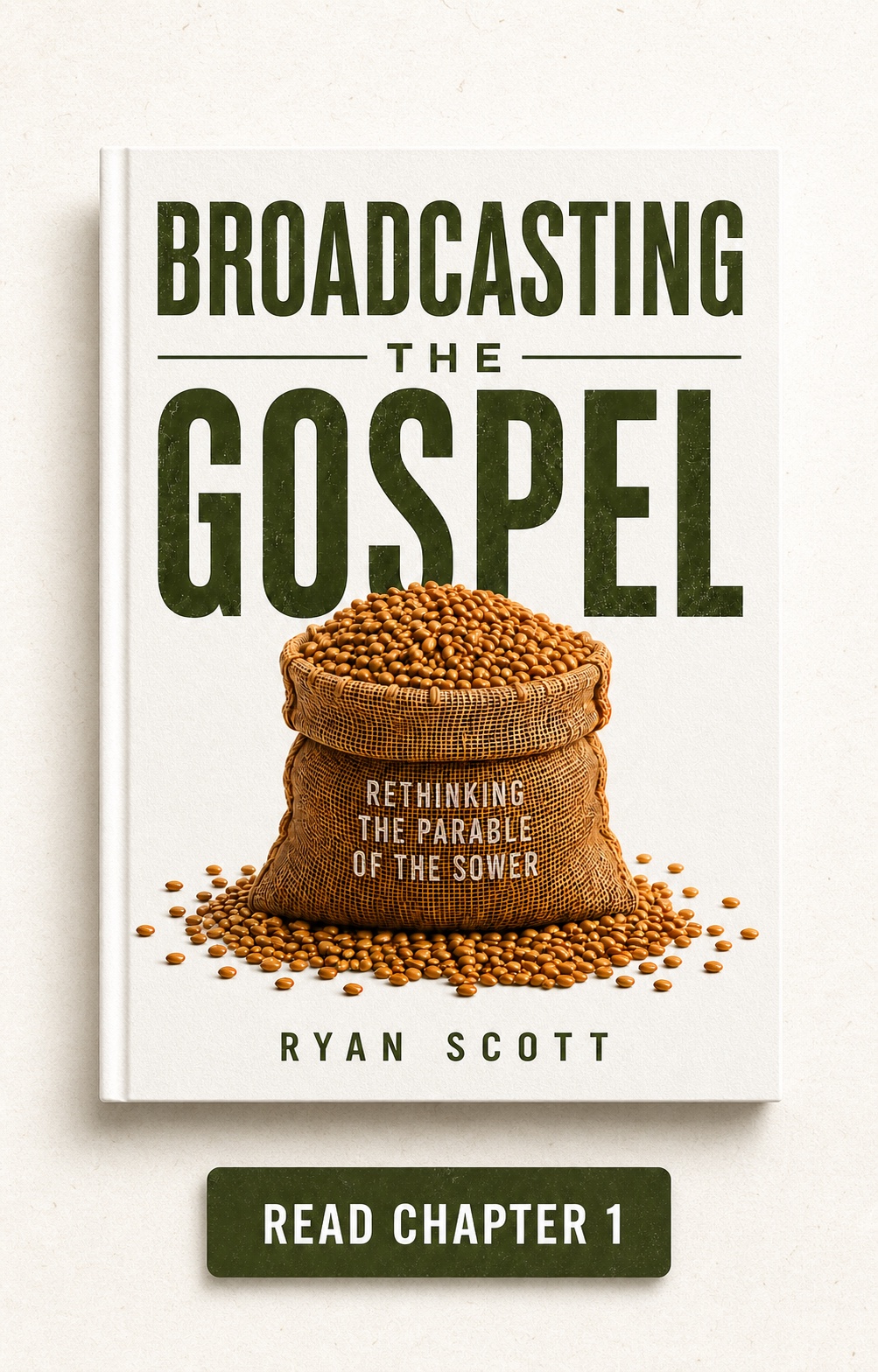
 “Broadcast” was a farming word first, and it changes how you read Matthew 13
 -
 What broadcasting actually looks like in an ordinary week
 -
 The one ChMS report that tells you if people are actually connecting
 -
 Breeze vs ChurchTrac: Which One Fits a Smaller Church Better?
 -
 How to evaluate church management software for your size church