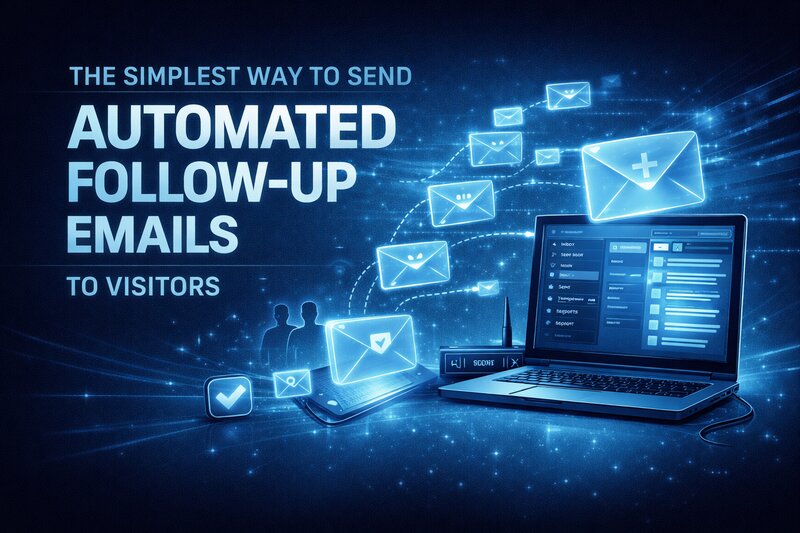
Visitor follow-up often fails in the gap between good intentions and limited capacity. A pastor may care deeply about every guest and still lose track of a visitor card by Wednesday. The fix is not to try harder. The fix is to stop relying on memory and build a simple follow-up system.
Why the first 48 hours matter so much
When someone visits your church for the first time, they’re making a quiet evaluation. They’re asking themselves whether this community noticed them, whether it felt like a place they could belong, and whether anyone would care if they came back. Most of that evaluation happens after they leave, not while they’re there.
A follow-up email that arrives within 24 to 48 hours answers those questions directly. It says: we saw you, we’re glad you came, and you’re welcome here. It doesn’t need to be long. It doesn’t need to be impressive. It just needs to arrive while the visit is still fresh.
Churches that follow up within 48 hours see dramatically higher return rates than churches that wait a week or more. The data on this is consistent across denominations, church sizes, and regions. The reason isn’t complicated. People connect with communities that make them feel seen. A timely email is one of the simplest ways to communicate that.
The problem is that “within 48 hours” is a standard almost impossible to maintain manually, week after week, when you’re also preparing sermons, visiting hospitals, counseling couples, and managing volunteers. You might hit it nine weeks out of ten. But on the tenth week, when your kid is sick or a funeral lands on Monday, those visitor cards sit untouched. And that tenth week is the week someone needed to hear from you.
Automation removes the variability. It sends the email whether you’re having a great week or a terrible one. And it does it every single time, without exception.
Step one: tag your visitors in your chms
The foundation of any automated follow-up is a way to identify who your visitors are inside your church management system. If you’re not already capturing visitor information digitally, that’s where to start.
Most modern ChMS platforms give you several ways to do this. The simplest is a digital visitor card. Planning Center, Breeze, Tithe.ly, and Church Windows all support some version of this, either through a web form, a church app, or a tablet at your welcome center. When a new person fills out the form, the system creates a profile and can automatically assign a tag or status like “First-Time Visitor.”
If you’re still using paper visitor cards, the process adds one small step. Someone on your team enters the visitor’s information into your ChMS after the service and applies the tag manually. This takes about two minutes per visitor. It’s not ideal, but it’s far better than leaving those cards in a pile.
The tag is what triggers everything else. Without it, your system has no way to distinguish between a visitor who came for the first time last Sunday and a member who has been attending for years. The tag is the starting line.
A few practical notes on tagging. Keep it simple. You don’t need five different visitor categories during the first visit. “First-Time Visitor” is enough. You can add more nuance later (second-time visitor, visitor from the community, visitor from another church) once your basic system is running. Complexity is the enemy of consistency, and right now consistency is what we’re building.
If your ChMS supports it, set the tag to apply automatically when someone fills out your digital visitor form. Planning Center does this well through its Forms feature. Breeze can do it through tags tied to specific form submissions. Tithe.ly handles it through their people management automations. The less manual work required, the more reliably this runs.
Step two: build the automated email
Once visitors are tagged, you need your ChMS or email tool to send a follow-up email automatically when that tag is applied. Most church management platforms include basic email automation. If yours doesn’t, or if you want more flexibility, a free Mailchimp account or a tool like Brevo (formerly Sendinblue) can handle this with a simple integration.
The setup in most platforms follows the same logic: when a person receives the “First-Time Visitor” tag, trigger an email. The email sends once, automatically, either immediately or on a schedule you define (Monday morning at 9 AM, for instance, if you want all Sunday visitors to receive their email at the same time).
For the email itself, keep three things in mind.
Write it like a person, not an institution. The email should read like it came from a real human being, not from a church office. Use the pastor’s name as the sender. Use a conversational tone. Keep the formatting simple: plain text or minimal design, no flashy graphics or newsletter-style layouts. The visitor doesn’t want a brochure. They want to know a person noticed them.
Keep it short. Three to five sentences is plenty. A greeting, an expression of genuine gladness that they came, one piece of useful information (service times, a way to connect further, or an invitation to a specific next step), and a warm sign-off. That’s it.
Don’t ask for anything. This email is not the place to ask someone to join a small group, sign up for volunteering, or download your app. It’s not even the place to ask them to come back, at least not directly. The entire purpose of this first email is to make the person feel welcomed and noticed. Anything more than that turns warmth into recruitment, and people can feel the difference.
A strong first follow-up email looks like this:
Subject: Great to meet you on Sunday
Hi [First Name],
I just wanted to say thanks for visiting [Church Name] this past Sunday. It was good to have you with us, and I hope you felt welcome.
If you have any questions about the church or just want to grab coffee and chat, I’d genuinely enjoy that. You can reply directly to this email and it comes straight to me.
No pressure on anything. We’re just glad you came.
[Pastor’s Name]
That’s the whole email. It doesn’t mention tithing, serving, membership classes, or the church’s ten-year vision plan. It communicates one thing: you were noticed, and you matter here.
Step three: add a second and third email (if you want)
A single automated email after the first visit is a significant improvement over nothing. But if you want to build a short sequence, two or three emails over the course of two weeks is the sweet spot for visitor follow-up.
The second email, sent about five days after the first, can introduce one more layer of connection. This is where you might mention a specific upcoming event (“We have a casual lunch for newcomers on the first Sunday of each month, no sign-up required, just show up”), or share a brief word about what your church values. Keep it just as short and personal as the first.
The third email, sent about 10 to 12 days after the visit, can be the most direct. If the person hasn’t returned, this is where you might say something like: “Whether you’re still looking for a church home or you’ve found the right fit somewhere else, I’m glad our paths crossed. If you ever want to come back, you’ll always be welcome.” This kind of email does something unusual. It releases the pressure entirely. And paradoxically, releasing pressure is one of the most effective ways to keep the door open.
Three emails over two weeks. Each one takes about ten minutes to write, and you only write them once. After that, every visitor who walks through your door receives the same consistent, warm, personal-feeling follow-up without anyone on your team having to remember to send it.
Which platforms make this easiest
Not every ChMS handles email automation with the same level of simplicity. If you’re choosing a platform or evaluating what you already have, here’s what to look for.
Planning Center offers workflow automations in its People module that can trigger emails based on form submissions or tag assignments. The setup is visual and doesn’t require any technical background. If you’re already using Planning Center for check-in or services, adding visitor follow-up automation takes about 20 minutes.
Breeze keeps things straightforward, which is its whole identity. You can set up follow-up sequences using tags and their built-in email tools. The interface is clean and the learning curve is minimal. For a church that wants something working by the end of the afternoon, Breeze is hard to beat.
Tithe.ly ChMS includes automations that trigger based on people data, including tags and form submissions. Their system integrates tightly with their other tools (giving, check-in, website), so if you’re already in the Tithe.ly ecosystem, adding visitor follow-up fits naturally.
Church Windows supports automated communications and can be configured for visitor follow-up, though the setup process has a few more steps than some of the newer platforms.
If your current ChMS doesn’t support email automation natively, you’re not stuck. A free-tier account on Mailchimp or Brevo, connected to your ChMS through a simple Zapier integration (also free at the basic level), can accomplish the same thing. The visitor gets tagged in your ChMS, Zapier sees the new tag, and Mailchimp sends the email. The whole integration takes about 30 minutes to set up and runs silently after that.
I prefer using a marketing platform that houses my website and all marketing activities, even social media, under one roof. HighLevel is my tool of choice at the moment.
The email nobody sent
Most churches are not losing visitors because of bad preaching, unwelcoming atmospheres, or weak programs. They’re losing visitors in the gap between Sunday and Tuesday. The gap where someone drives home thinking “that was nice” and then never hears from anyone, and slowly the memory fades, and the following Sunday they sleep in or try somewhere else.
That gap is not a people problem. You care. Your greeters care. Your congregation cares. The gap is a systems problem. And systems problems have systems solutions.
A visitor who receives a warm, personal email within 48 hours of their first visit has a fundamentally different experience than a visitor who hears nothing. The first person has evidence that the church meant what it said at the welcome table. The second person has only a fading impression and a growing list of reasons not to go back.
We can close that gap in under an hour. Tag visitors in your ChMS. Write one short email. Set it to send automatically. That’s three steps, and the last two you only do once.
What to do this afternoon
Open your church management system. Create a tag called “First-Time Visitor” if you don’t already have one. Set up a digital visitor form if you’re still using paper only (you can keep the paper cards too, but give yourself a digital path). Write the email. Keep it under 100 words. Make it sound like you, not like a form letter. Set the automation to trigger when the tag is applied. Test it by tagging yourself and making sure the email arrives.
The whole process should take 30 to 45 minutes. If you want to add a second and third email to the sequence, budget another 20 minutes.
By next Sunday, every visitor who fills out your form will receive a personal-feeling email from you without you having to open your laptop, find their contact information, or remember to follow up. The system handles the consistency. You handle the relationships that grow from it.
The couple in Nashville needed about 60 seconds of follow-up to feel noticed. The pastor needed about 30 minutes of setup to make sure that follow-up would never be missed again. The math is simple. The stakes are not. Every visitor who walks through your doors is someone who chose to show up. Responding to that choice, reliably and warmly, is one of the most faithful things a church can automate.
Recent Posts
-
 “Broadcast” was a farming word first, and it changes how you read Matthew 13
 -
 What broadcasting actually looks like in an ordinary week
 -
 The one ChMS report that tells you if people are actually connecting
 -
 Breeze vs ChurchTrac: Which One Fits a Smaller Church Better?
 -
 How to evaluate church management software for your size church